
Starfield is an interesting foray into the space game genre and while they get many things right, Bethesda struggled with some core concepts of the genre, failing to make a cohesive package.

First, let’s talk about the story. It’s not bad, but if you focus solely on the main story arc you’ll get about halfway through before realizing it devolves into a series of routine fetch quests, wholly unaided by the unnecessary presence of a starship (more on that later). On the other hand, if one chooses to wade into the side content, whether you’re uncovering long-hidden secrets about Terrormorphs, or hunting down a ship thief for a mega-corporation, side quests are where you will find the bulk of Starfield’s more compelling content.
Moving onto the topic of your followers, the companions in the game are lacking. Mechanically they are about the same as Fallout 4, but their narrative presence just feels off. For instance Sam, one of the companions, wanted to speak to me at least 3 times within an hour of following me. Not only that, he was uncomfortably familiar with me, treating me like we’d known each other for years instead of the handful of minutes/hours we had actually been traveling together. Another companion, Andreja, constantly complained about me taking too much time to pick a lock after I had already finished, which is especially annoying since time is frozen during the minigame to begin with. Overall, the interactions felt awkward and forced.
One notable highlight of Starfield are the weapons of the game. The progression offers a variety of options, with statistics adjusting according to one’s level and chosen difficulty settings, as well as a diverse range of weapon models on offer. The shotguns, for example, let you go from a trusty double barrel to a pump action, to a variety of mid-range sci-fi styles, to my personal favorite called the Breach. Each upgrade felt meaningful without rendering previous favorites redundant.
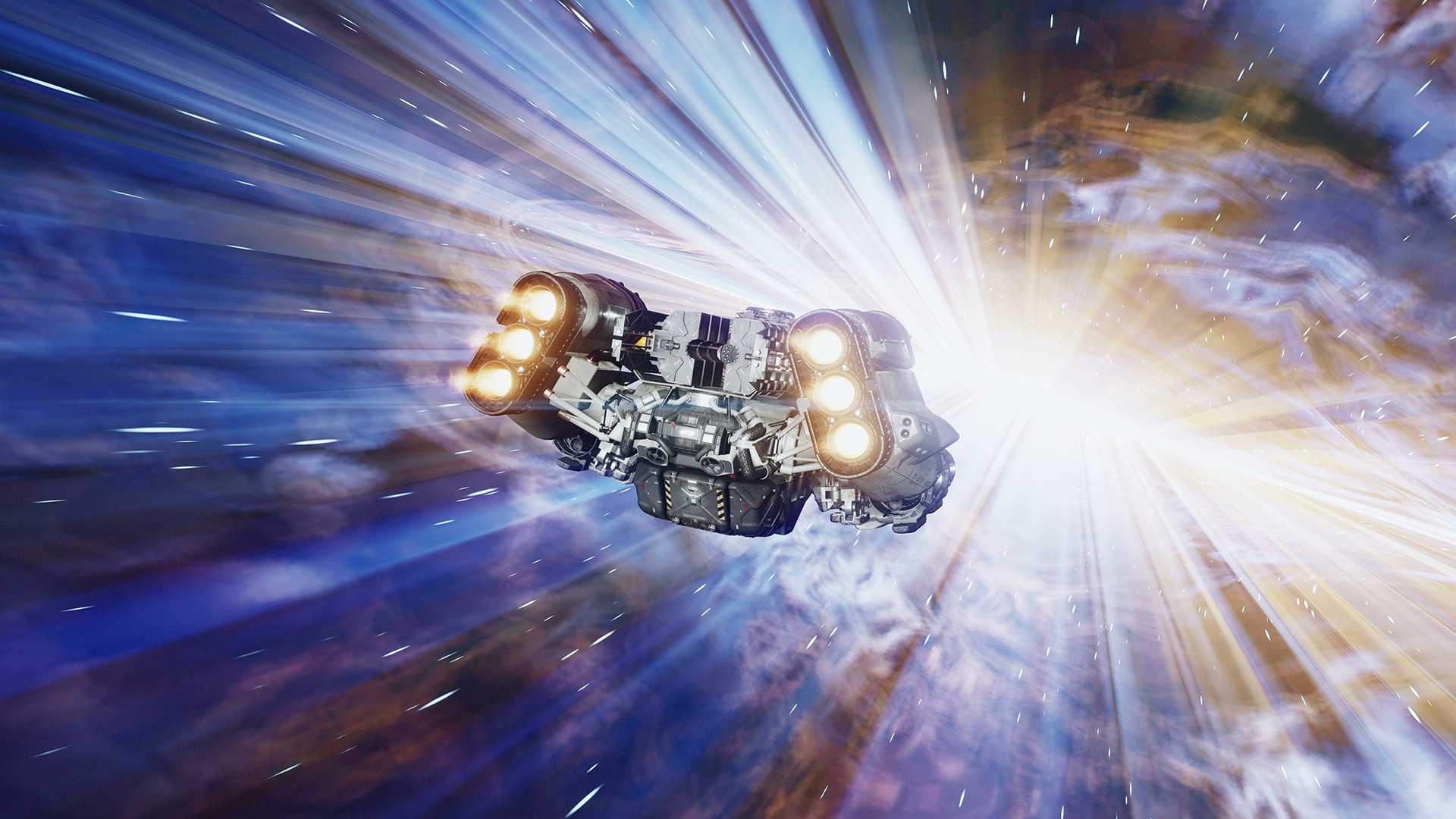
Now, let’s address the topic of the ships within the game. They are completely unneeded. That’s right they serve no purpose beyond giving you a little bit of, mostly, repetitive combat and a cutscene when traveling to unexplored systems. While in space, the player is able to leave their seat, allowing the use of amenities like the research bench, bed, or cooking station on board, however, if you have any need for anything other than the bed, the lodge or an outpost are vastly better options and just a loading screen away. The moment I got a quest where I went to the eye, fast traveled to a planet, collected an artifact, and instantly warped back to the lodge from inside the cave. I realized that the ship is really just additional loading screens and doesn’t really offer anything of substance. It exists within a strange limbo between an actively useful game component like in Star Citizen, Elite Dangerous, or No Man’s Sky and a genuinely usable mobile base akin to The Outer Worlds. Unfortunately, it does not measure up to any of those experiences and additionally renders shipbuilding mostly aesthetic in nature, which is disappointing.
During my time playing the game, I observed that it lacked cohesiveness compared to their previous titles and I realized that it was the space aspect as a whole. What I mean is that, in Fallout 4, I could opt out of using the fast travel system, and my experience of the game was rendered rich with interesting and unexpected content. I would be walking across the wasteland just going from A to B and run across intriguing things happening that turned into hours of adventure and it felt incredibly natural. Starfield’s game space, on the other hand, lacks this element. They have radiant quests pop up in cities, sure, but their planets (even the habitable ones) don’t currently facilitate this kind and natural meandering experience and it all feels so separated from the core story rather than complementing it.
So do I believe Starfield is a good game? Ultimately, I found it enjoyable during my initial playthrough. However, I must acknowledge the significant cost associated with continuing the main story, which made me realize the minimal value of features such as the shipbuilder or outposts. From a narrative standpoint, it makes sense, but from a mechanical perspective, it also means that these elements cannot be essential to completing the game since some individuals may not be interested in engaging with them. This is clearly evident within the game itself, as I personally only had minimal involvement with the shipbuilder and completely ignored the outposts throughout my entire first playthrough.
Starfield does have many positive aspects, but it also incorporates several peculiar design choices that hopefully will be addressed in the future. Personally, I would appreciate a more immersive implementation of ships and a stronger purpose for outposts beyond mere experience and monetary gains. At the end of the day, I think that really sums it up. Starfield left me wanting more, not necessarily of itself specifically, but simply more. More mechanics, more story, more nuance, more mystery.
Just… More.
 Real Women of Gaming
Leave a comment